The History of St Leonard's Church
Explore the fascinating history of St Leonards from the 1800's to present day gathered from numerous research sources conducted by members and associates of St John's & St Leonard's Church over time and collated by the Parish Administator in 2025.
Indulge in the early beginnings, with the Origins of St Leonard's, it's first Vicar; Rev Paul Wyatt and the Tin Tabernacle in 1889. Look further into St Leonard's Hospital, it's origins, Charity work and building of the new permanent Church in 1912. Explore how the New Church became redundant and caught fire in 1988. Understand the development of St Leondard's Church Centre and where it stands today.
St Leonard's Parish & Origins of it's name
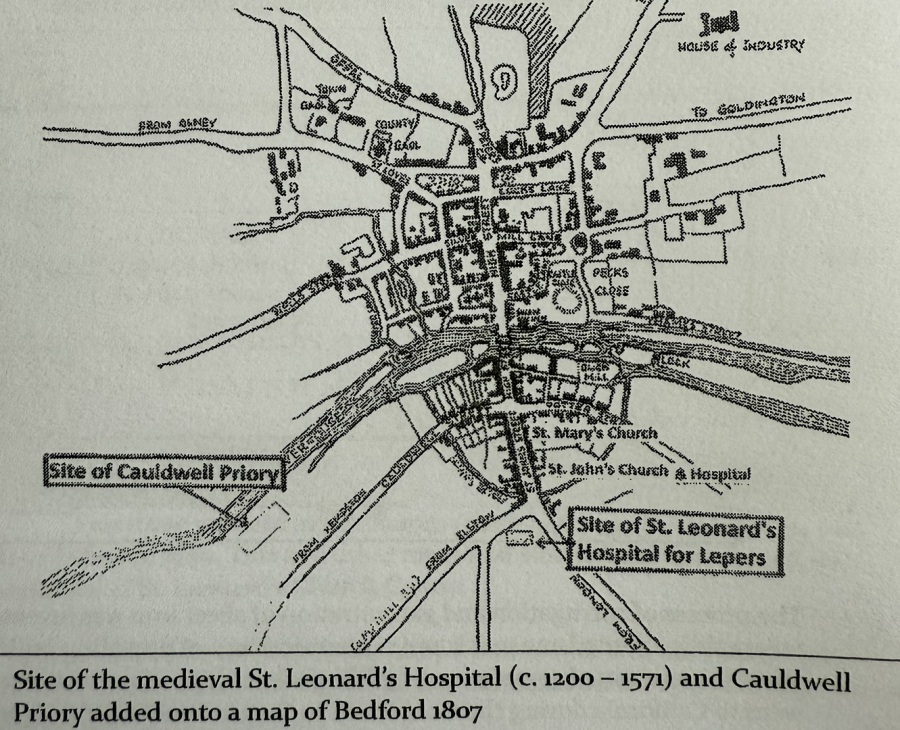
St. Leonard's parish only came into existence in 1899. It is named after the medieval St. Leonard's Hospital for Lepers which, not surprisingly, stood outside the town boundary between Amphill Road and London Road.
The last building from the old St. Leonard's Hospital became St. Leonard's farm cottage. That was demolished in 1845 to make way for the St. John's railway station. Only the name St. Leonard's Avenue preserves the location of the medieval St. Leonard's Hospital.
However many of the people involved in setting up St. Leonard's parish in 1899 would have clear memories of the St. Leonard's farm and cottage and of the annual feast and fair of St. Leonard's which, it seems, had continued for some 300 years after the demise of the hospital.
The parish of St. Leonard's was established in 1899 following rapid expansion of Bedford in this direction with the advent of the railway to Bedford in 1846.
Until the mid-1800's the town effectively ended at the end of St. John's Street marked by the prominent King's Ditch. The following map shows that outside the King's Dyke (or Ditch) was the medieval St. Leonard's Hospital for Lepers, between the London Road and the present Ampthill Road (then the main route to Elstow).
Not surprisingly, a hospital for lepers stood outside the town boundary, whereas the St. John's Hospital, which was inside the town, was more of a refuge for the poor and so did not carry the same health risks.
These hospitals or hospices were established by religious orders to care for the sick and poor. Both were strategically placed near the large church of St. Mary and the entrance to the town where there was also a large market place. The main St. John's Hospital building amazingly is still recognisable if you look carefully at the building next to St. John's church, now used by St. John's Ambulance. The same is not true of the old Hospital of St. Leonard the Confessor (to give it its full name). There is now no trace of that medieval building. However until 1845 some of the buildings still existed and were still in use as part of St. Leonard's farm cottage and barns. The buildings were finally demolished in 1845 to make way for the St. John's railway station and sidings. Yet not all traces of St. Leonard's Hospital have been totally erased as the names of St. Leonard's Avenue and St. Leonard's Street (near the junction of Ampthill Road and St. John's Street) preserve the location of that medieval Hospital.
It seems that there had also been an annual fair, known as St. Leonard's fair, which had its origins in medieval times. The first vicar of St. Leonard's Church in Victoria Road referred to the fair as having "dwindled away" in his lifetime in a speech in 1892 when he was still only 36 years of age. It was another vestige of the old St. Leonard's Hospital which faded away.
Even in 1841 there was little development to the south except the Bedford
Infirmary and Fever Hospital, however times were changing and by 1876 expansion was beginning rapidly.
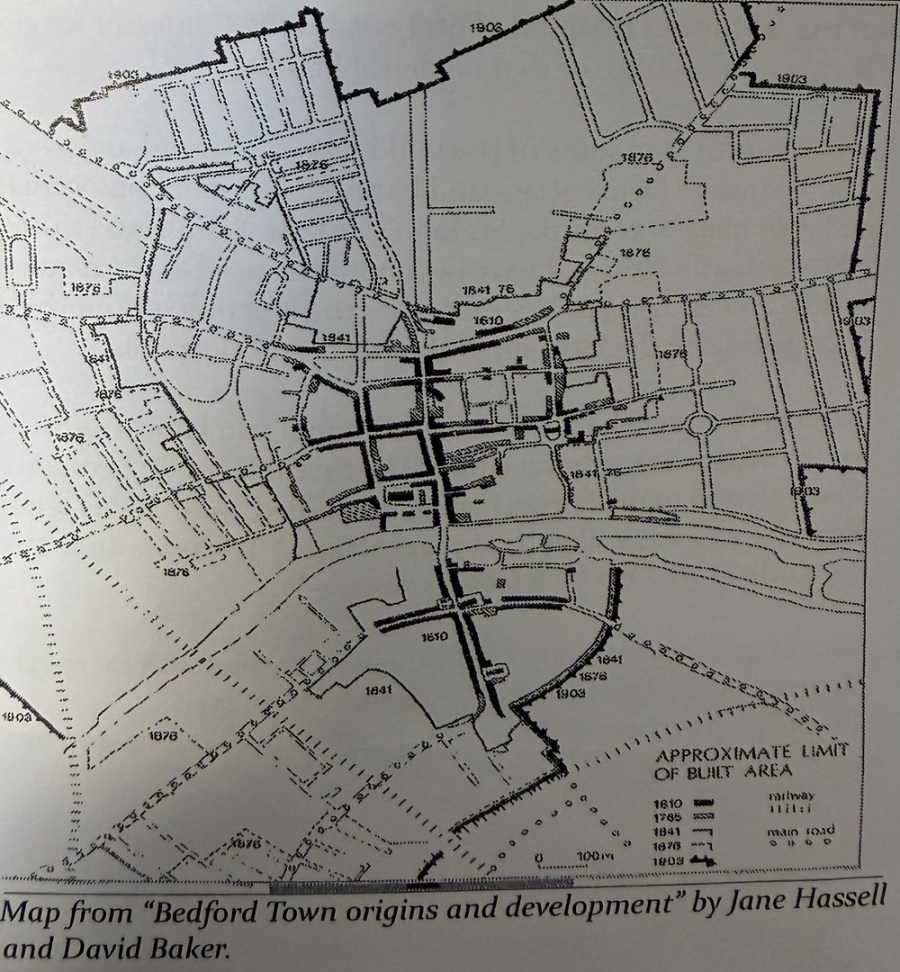
The reason for the expansion south of the town was linked to the coming of the railway. By 1844 there was sufficient local support for people to invest in railway shares to build lines into Bedford. First was the Bletchley to Bedford line in 1846 ending at St. John's old station built between the Amphill Road, St John's Street and Elstow Road, though the line was later extended to Cambridge. The much-diminished St. John's station is no longer in the same place but the name "Station Road" at the bottom of the St. John's Street railway bridge remains as a witness of its former position and importance. Then came the more strategic main line down to Hitchin and London which provide the stimulus for industry to develop nearby but also separated it from the main town area as Paul Wyatt observed when he commented "It was no joke being separated from the rest of Bedford by the terrible boundary of a railway and a bridge."
To feed Britain's growing population there was a demand for farming machinery.
John Howard had set up a business in the High Street making steel ploughs in 1813 and his ploughs and other farming machinery became well known. As one effusive writer put it: "Soon the virtues of the Howard plough were cried throughout the land, and even in foreign parts".
The huge new Britannia Iron Works on Kempston Road was built between 1857 and 1859 by John Howard's sons to produce more farming machinery. Other industry included an animal feed mill alongside the old St. John's station and Sandhurst Road laundry which no doubt owed its position to its proximity to Bedford Hospital.
Housing for these workers grew into a network of roads between Amphill Road and London Road, most of which was still part of the dominant St. Mary's parish with only a small enclave as part of St. John's parish (including St. Leonard's Avenue and St. Leonard's Street as it happens). It was these workers and their families that Paul Wyatt had concern for when he sought to establish a church and parish in this area.
Rev. Paul Wyatt, like his father James Wyatt, was a keen researcher and writer of antiquities and so it is not surprising that when he set about creating the new parish in in 1889 that he revived the name St. Leonard's for this new parish. He also appears to feel he shared the medieval men's spirit for charitable work saying of the St. Leonard's Hospital that the religious order showed:-
"that noble mingling of religious sentiment with practical utility which received its first impulse from a vivid realisation that ministering to the afflicted was to the Christian no less than a ministration to the Lord himself."
Tin Tabernacle & Rev Paul Wyatt
The first service was held in St. Leonard's 'tin tabernacle' on June 28th 1889. There were already similar buildings on the new areas of Christchurch and St. Andrews in north Bedford. It was erected on land given by Mr. Theed Pearse next to 6 Victoria Road, now occupied by Hadfield Court flats.
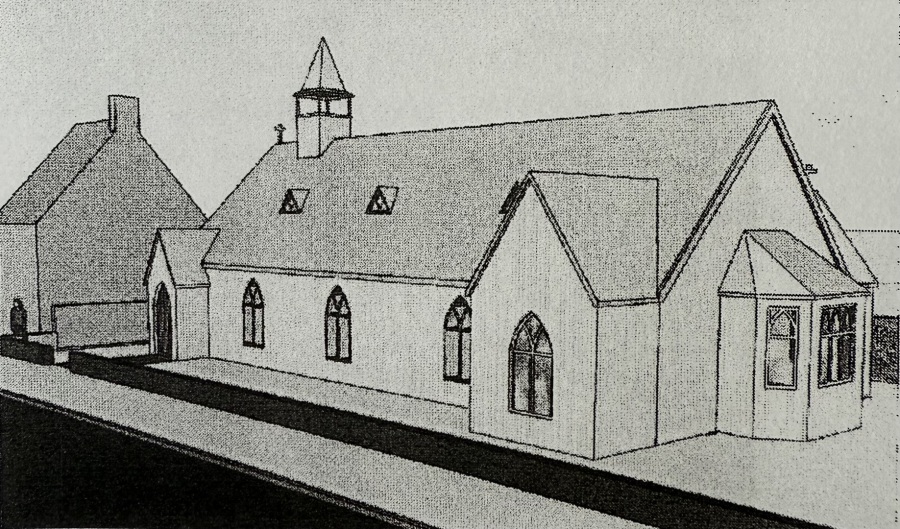 Computer generated model of the iron church by Ian Williams based on the actual 1889 plans and exmaples of tin tabernacles at the time.
Thousands of 'tin tabernacles' like this were growing up in new urban areas across the country. The corrugated iron sheets were mass -produced, easily transported and quickly erected.
Rev. Paul Wyatt was the driving force in the late 1880's to provide a place of worship for this developing area in the former rural part of St. Mary's parish. He describes the start of St. Leonard's parish like this:-
"Long before the actual starting the temporary church of St. Leonard, I had a conversation with my old dear friend, who was also my old master, the vicar of St. Mary's and offered my services to carve out a new district of St. Leonard's. After short and practical suggestions, the vicar said "We will try to do it and go to see our old friend Mr. Theed Pearse. The kindliest sympathy was forthcoming from Mr. Pearse who aided our efforts with the grant of the first site. With that bit of land and nothing else but blessings I started. It was no joke being separated from the rest of Bedford by the terrible boundary of a railway and a bridge. I was absolutely alone."
Rev. Paul Wyatt's enthusiasm and energy combined with his wealthy, well-connected family led to the erection of a pre-fabricated corrugated iron church of the type known as 'tin tabernacles' on the land in Victoria Road.
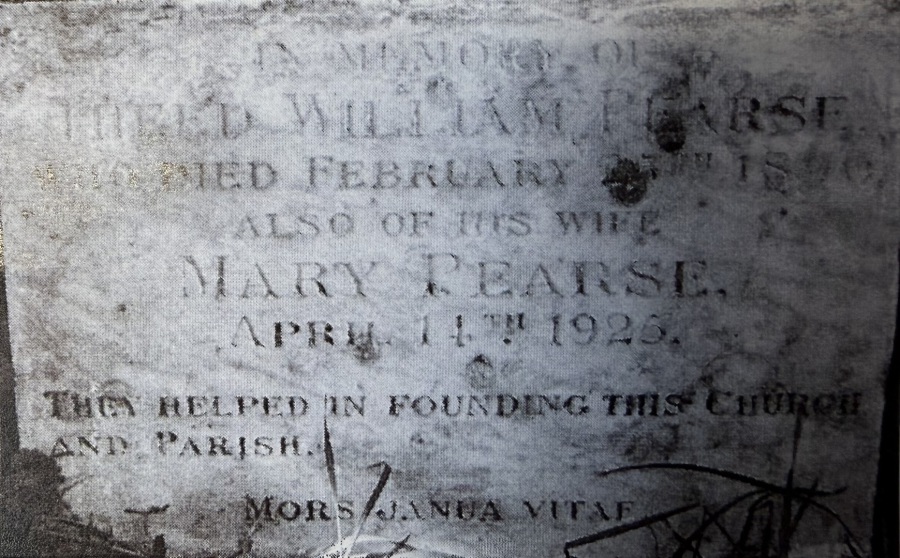
That land was a gift but later other plots of land were given or sold by Mr. and Mrs. Pearse for St. Leonard's later buildings. The stone in the picture below was laid in the church which had been built in 1911/12 but demolished in 1990. This and other memorials stones from that church are preserved currently at St Leonard's Church Centre in the garden
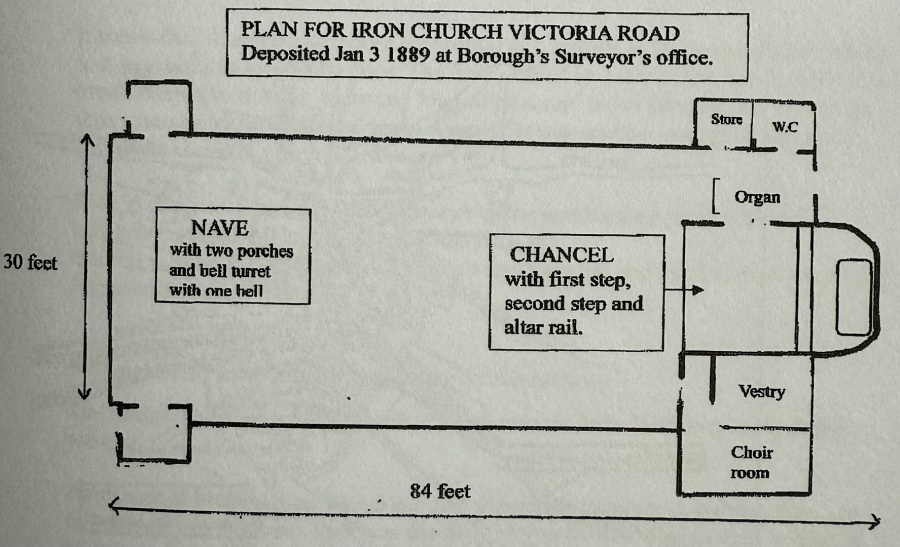
No photo or sketch has survived of this temporary building but the original plan for 'St. Leonard's Iron church' was submitted to the Borough Surveyor in January 1889 and preserved in the Bedfordshire Records Office.
That first church was larger than the present St. Leonard's church hall, being 84 feet long and 30 feet wide compared to the present hall of 63 feet by 23 feet, complete with a single bell in a bell turret. It was supplied by Isaac Dixon and Co. of Liverpool 23.
It appears that the first Incumbent, Rev. Paul Wyatt, financed much of this temporary church and its fitting himself.
The process of corrugation and galvanisation of sheet iron was invented in 1828. It was rapidly adopted as a quick and economical way of providing buildings. In 1854 alone it is estimated some 30,000 buildings were shipped to Australia and others went to California during the Gold Rush. In Britain itself rapid industrialisation triggered large population movements between the 1860's and World War I and thousands of these iron buildings were used. The Anglican church's missionary efforts in these new urban areas meant many were bought to use as churches.
As well as the one erected for St. Leonard's, a 'tin tabernacle' Mission Hall of St.
Cuthbert's was erected in Castle Road in 1883 and later moved to Denmark Street as the original Christchurch. Likewise the original St. Andrew's Church on Kimbolton Road was a 'tin tabernacle erected in 1895 and still standing today along Pemberley Avenue where it is used by St. Andrews School.
The St. Leonard's tin church was still in existence in 1926.
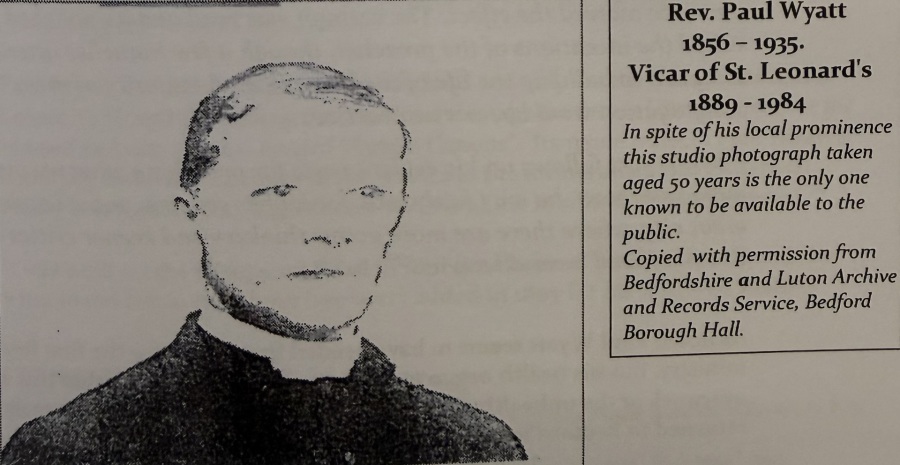
The young Paul Wyatt was from a well-known Bedford family. After training for the Anglican ministry he was soon noted for his preaching and appointed to a church in Regent's Street London at the young age of 26 years.
In 1886, aged 30, he declined further ministry in London and stayed in Bedford to establish St. Leonard's. His ministry here was by deed as well as by word.
He obtained the land on Victoria Road, erected the first temporary church and raised funds for the permanent church. In addition he established a charitable foundation to provide nourishing food to convalescents, known as the St. Leonard's Hospital. He raised funds for the building built for that purpose, which is our present Church Centre.
Paul Wyatt's parents were well known in the town for their involvement in civic, social and charitable work of the town. His father, James Wyatt, was a keen archaeologist and also set up "The Bedfordshire Times" newspaper in 1845.
Paul Wyatt was Vicar of St. Leonard's for its first five years, followed by his brother, Rev. Vetruvius Wyatt. Paul became Chaplain at the Royal Chapel of the Savoy, London but remained closely involved in the work of St. Leonard's and Bedford, taking up civic duties in the town and county.
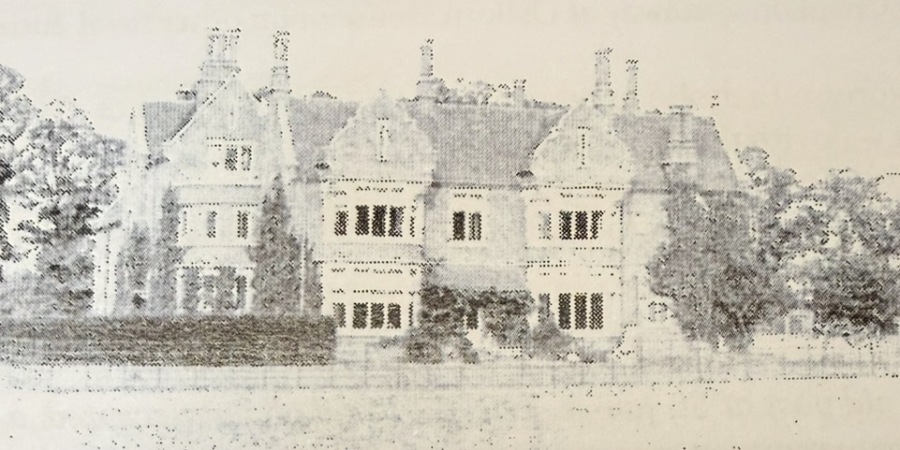
It is clear from the speeches in 1911 that Paul continued to play an active role in developing the work of the church. Paul Wyatt had the foresight to acquire land not only for the church site and St. Leonard's Hospital building but also for a vicarage for future Vicars. However for himself he built a house named "Austin Canons". Its name reflects Paul Wyatt's enduring historical interests as the monks at the former medieval Cauldwell Priory belonged to the Augustinian order and the monks known as 'canons'.
It was built on the Kempston Road in 1891 (just beyond Stafford Road) and the wing to the left in the photo added in 1895 for his widowed mother. It's distinctive architecture is well known to many who live in the area but it is doubtful if many know its first owner.
Paul Wyatt served on Bedfordshire County Council for 12 years (1891 - 1913), an Alderman from 1901 and retained a keen antiquarian interest. Paul was 79 years of age when he died in 1935 and Vitruvius died two years later aged 91 years of age.
A Kempston lady recalling past places and 'characters' in 1962 wrote
"Perhaps the most familiar figure of all was Rev. Paul Wyatt, antiquarian and eminent Bedfordian, whose Kempston house, Austin Canons, is now derelict. At one time Mr. Wyatt drove a smart phaeton". In later years he made a leisurely progress to town on a dignified tricycle."
St Leonard's Hospital & Wyatt's Charitable Work
In 1889 when Rev. Vitruvius Wyatt, returned to Bedford to join his brother in his work at St. Leonard's, it seems Paul Wyatt had already started a charitable work here. In Vitruvius' Wyatt obituary, the writer described the time Vitruvius returned to Bedford to join his brother in the newly created St. Leonard's parish.
"A few years earlier Paul Wyatt had set to work to build a temporary church, a cottage hospital and a reading room. His enterprise prospered and the foundations of a successful ministry were even more firmly established by the additional work done by Vitruvius. "
After Rev. Paul Wyatt had erected the temporary iron church for St. Leonard's in 1899, he set about getting a base for charitable work in this new parish which he described in a speech of 1911:- "Then by tapping an entirely different set of sympathisers in Bedford we obtained St. Leonard's Hospital which has amply fulfilled its triple objects viz. To be able to help the sick and needy of the neighbourhood, to be a centre for entertainments and a lending library and to be a meeting place of the Parish."
So three years after the temporary church was erected, the St. Leonard's Hospital building was built. The date 1892 can still be seen on the front gable of the building which is now St. Leonard's Church Centre.
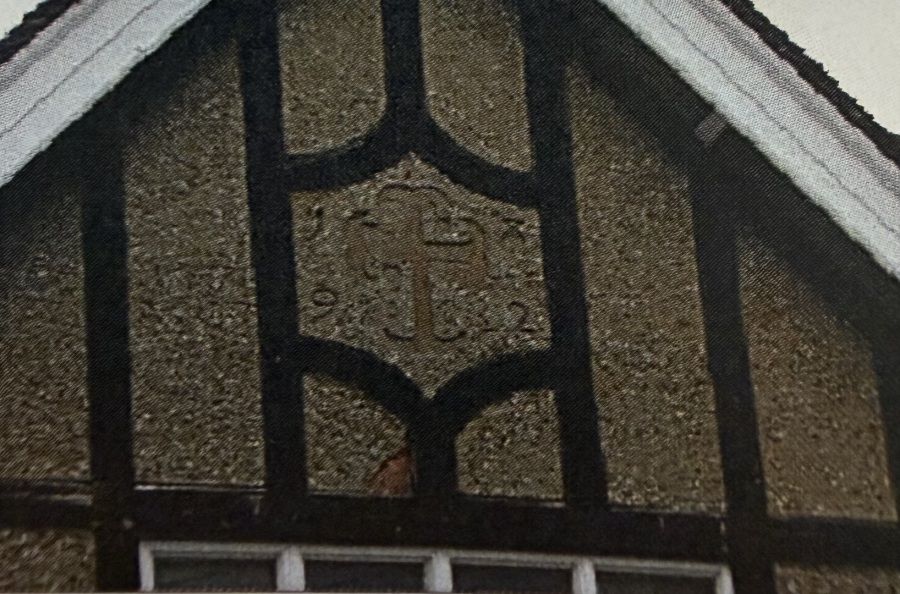 Current face of the St Leonard's Church Centre Building depicting 1892
St Leonard's Hospital name origin
The objectives for the building set out by Paul Wyatt make it clear that it was never intended to be a place for sick people to be treated, so why call it a 'hospital? The answer lies in Paul Wyatt's keen interest in local history and preservation.
It is clear that Paul Wyatt and others in the 188o's still remembered well the existence of the farm buildings from the old St. Leonard's Hospital. Paul Wyatt recalls that at the laying of the foundation stone in 1892:-
"We are met together to lay the foundation of the revived Hospital of St.
Leonard the Confessor, which some four centuries ago, with its sister foundation of St. John's graced this southern side of Bedford. The idea which underlay the Hospitum, Hospice, House of Mercy, was that noble mingling of the religious sentiment with practical utility which received its first from a vivid realisation of the fact that ministering to the afflicted was to the Christian no less than a ministration to the Lord himself. St. Leonard's Hospital, as most of you are aware, was founded about the year 1300 and had six 'freres chapleyeurs' wearing religious habit. It was specifically set apart for the 'sick, paralysed and lepers'....For five centuries it fulfilled the intentions of its unknown benefactor and we do not doubt it was blessed under God's will for the relief of many. Then came the torrent wave of the reformation, which in its cleansing destroyed much that was valuable. For 350 years the work of St. Leonard's Hospital lay dormant, till at the last, in the lifetime of some of you, that great factor of modern civilisation, the railway, swept away the last traces of the ruined building itself. St. Leonard's Hospital had become a name and, when its last stones were removed, but the shadow of a name in Bedford. The local feast and the fair which accompanied it have in my lifetime dwindled away and in 1889 the whole past history seemed well-nigh forgotten. And now, as we believe, in God's good providence this little sanctuary (the church) has arisen hard by the old spot, called after the name of the Confessor: and in the same year, 1889, a small body undertook the bold step of reviving the Hospital itself"
Rev. Paul Wyatt had a board erected listing the names of the former Masters of the medieval St. Leonard's Hospital from 12.. to 1571 as a reminder of his inspiration from the past. Inside the present St. Leonard's are boards (illustrated below) which give the names of the people at the helm of that charitable work, in which Paul Wyatt's name is prominent.
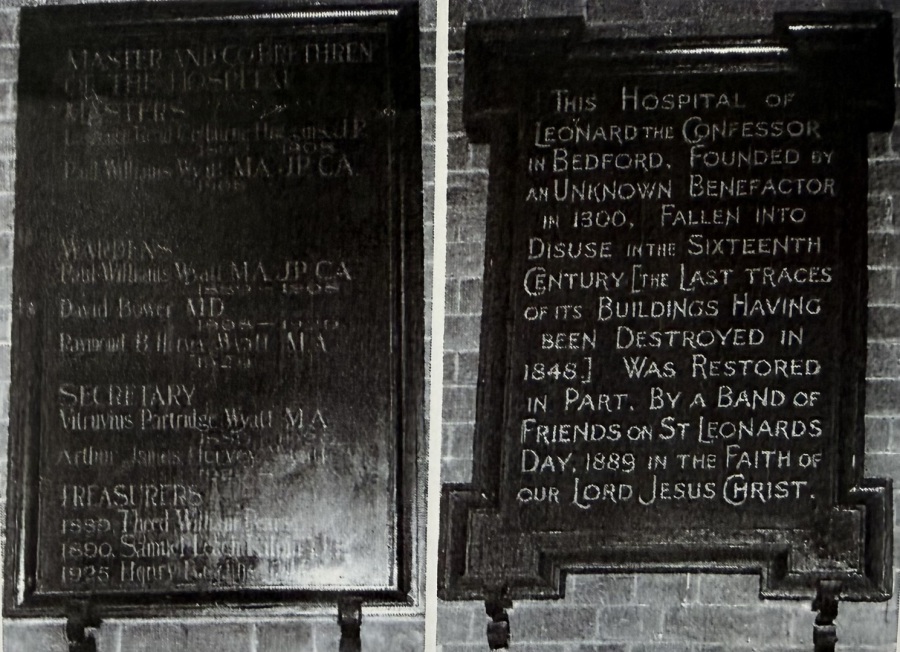
Charitable work of new St Leonard's Hospital
In the speech of 1892 at the laying of the foundation stone Rev. Paul Wyatt went on to explain the charitable and social work envisaged for this new building:-
"At first we began very tentatively, but the movement has grown just because it was practical. It has more than justified the experiment and the only difficulty now is the need of increased premises and larger accommodation.
The objects are so practical and the expenses so slight. We help the breadwinner to restored health, under God, by giving him well-cooked diets and, where special need calls, we send him to the sea or country for a complete rest and change."
Rev. Vetruvius Wyatt on the same occasion added;-
"In our former temporary premises we have been enabled to send out 1,037 diets representing about 150 patients. Our second care was to provide for convalescent patients when they could get out, by procuring tickets for convalescent homes. Eighteen persons had been sent to the seaside and similar places."
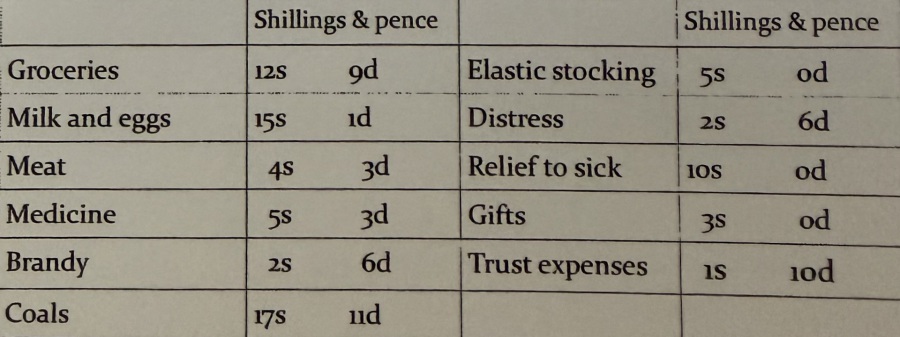
In a three-year period that seems a formidable achievement and good justification for the building of this large new building. In addition the large hall was expected to be a meeting place for social activities and "useful and instructive gatherings". It was equipped with a stage and also a library and reading room. However this level of activity was not sustained, so by 1911 the accounts showed a half year total income of less than £4.00 and the type of charitable activity had contracted from provision of wholesome diets and convalescence to small gifts as shown on the following list of expenditures from October to August 1911:
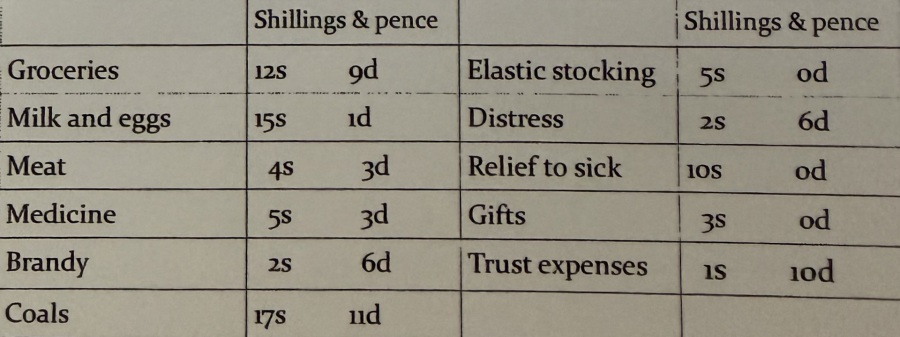
The same Parish Magazine article from 1911 states " In consequence of the falling off of subscriptions to the Hospital due to reasons well understood, the monies have declined and the Hospital as a centre of Charity cannot be maintained 4; so that the diets will cease and as far as the Trustees are concerned the services of the Caretaker will not be required in consequence.
We regret for the sake of the Parish and our own that this arrangement must be made; for the diets have been for a long time a very desirable and useful means of helping convalescents."
The trustees of St. Leonard's Hospital therefore rented the whole building to the church to use as a church hall for a rent of £35 per annum and to be responsible for all internal expenses.
But meanwhile, by 1911, the focus was on the new church being built between the temporary iron church and St. Leonard's Hospital building and a new chapter in the life of St. Leonard's Church and Parish is about to open.
St Leonard's 'permanent' Church
The original plans for the 1912 church were very ambitious. It would have been 135 feet long and 62 feet wide and with seating for 824 people! This drawing from a local newspaper shows the original design. By the time it came to be built, some 18 years later, the plans had been scaled back to two-thirds of the length and the remainder was never built.
At a meeting in 1911 to agree on going forward with the reduced plan, Paul Wyatt expressed some disappointment that financial constraints had already resulted in the plans for the new church being modified.
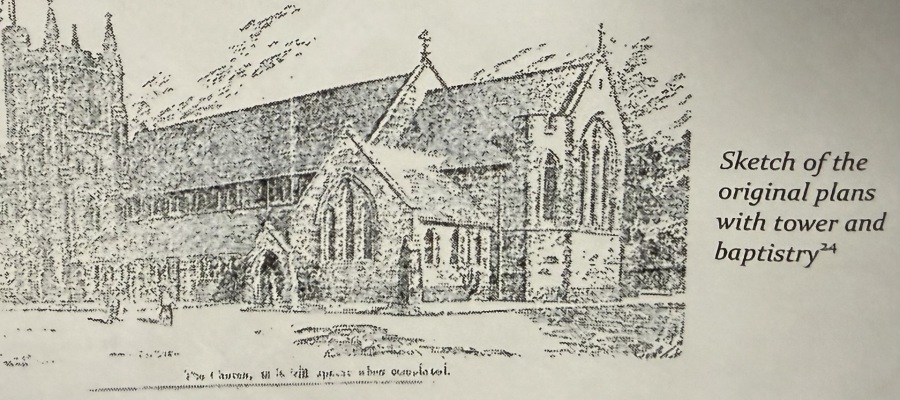 Sketch of original plans for new Church from Bedford Circular Feb 24 1914
Paul Wyatt advised that they should have a 'definite sum in hand' before starting to build. "It is very hard to know the right moment when to strike. Here you are full of enthusiasm and if you let it go they might lose the climacteric: on the other hand if you start a moment too soon, you will have a very earnest but the poorest congregation in Bedford, and might hamper yourselves with an onerous guarantee and a large bank overdraft."
However Paul Wyatt went on to offer to finance a small chapel for daily prayer,
"in no sense with regard to my own work in the parish but as a memorial to my father who was a public servant and lived many years in Bedford and to my mother who came to the Hospital meetings to the last, and it might be called the Wyatt Chapel. When the foundation stone and plaque for the new church were laid in 1911, there was also a plaque for this chapel dedicated to his parents.
Following this generous offer from Paul Wyatt, a "strong permanent Church Building Fund Committee was formed. In the same newspaper the Archdeacon, Rural Dean and Paul Wyatt wrote:- "The enthusiasm of those present and the statement of the amount already raised in small sums, strikingly testified to the need and desire of the congregation and district for a permanent church.
As the neighbourhood is a poor one, no considerable donations from the residents can be looked for. But the self-sacrifice of members of the congregation and the earnest endeavours of the church officials made such a deep impression upon us, that we join in cordially commending the work to liberal and well-disposed churchmen in other parts of the town and country. Independently of conditional gifts approaching £1,000 the sum already raised is over £1,700. If one more £1,000 can be secured, the first portion of the building can be started this summer. " It would seem this further sum was quickly raised as just over six months later, on September 28th 1911, the foundation stone for this new church was laid.
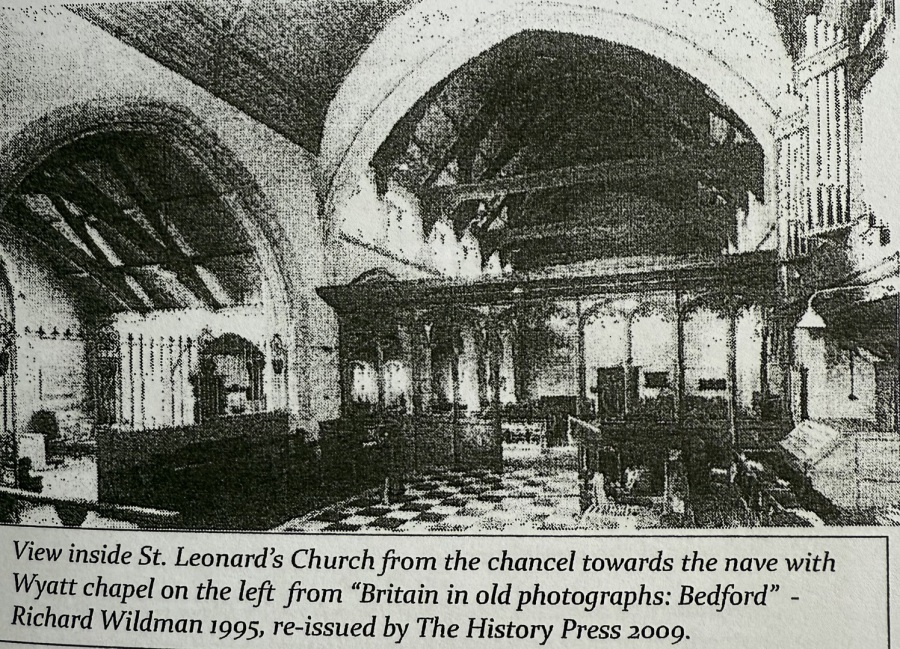
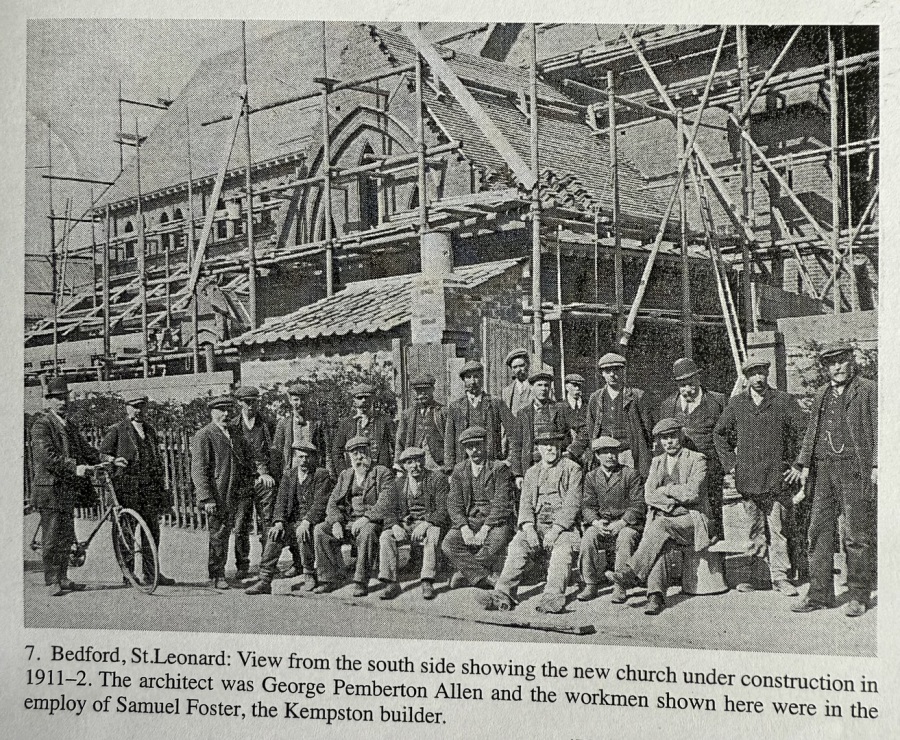
A year later, September 26 1912 the church was dedicated and open for services. When the building had been fully paid for, just 18 months later; the consecration service took place on March 23rd 1914.
At the time of the decision to build in 1911, the temporary church was still well attended. On Easter Day 1911 there were five services and nearly 400 Communicants in total. The five services were Choral Celebration, Morning Prayer, Children's service, Even Song and a Men's service. The Men's Service
"brought nearly 200 men" whilst at Evensong "many unfortunately were not able to find a seat."
In the same year there was a total of 58 baptisms and 50 candidates from this church at a Confirmation service held at St. Paul's of which 20 were adults.
The Parish Magazine reported on a plethora of social and spiritual meetings underlining the impression of a thriving church.
The "Daily Bedford Circular" of 1914 gave the following glowing history of the development of the new church:- "The story of the building of the church reads like a romance, and truly there is something of that self-same spirit of devotion and self-sacrifice which raised churches stone by stone in days of old, to be perceived in the labours of love of the populous and by no means rich parish of St. Leonard It will be apposite to allude briefly to the development of the movement since it was incepted by the Rev. Paul Wyatt, the first incumbent of the parish in 1899.
He secured the bulk of the land required for the site of the new church by the kind gift of the late Theed Pearse. Mr. Wyatt started the fund for the erection of the new church and the good work was continued by his brother, the Rev. V.P. Wyatt. Between them they raised £1,644 which was invested in East India Stocks.
The Rev H.S Tupholme the incumbent in Noverber 1910 and with characteristic energy applied himself to the task of increasing the building fund. Amongst other sums received have been 6500 from Mrs. Blower and £328 from Rev. Paul Wyatt for the cost of building the side chapel.
From first to last something like 5,000 has been raised, and of this £3,000 has been contributed in three years by the parishioners themselves, from many sources, such as sales of work and offertories - a splendid record.
The foundation stone and memorial stones were laid on September 28th 1911 and the church was opened by a special service on September 26th 1912. Now it is practically completed, and free from debt, and with its consecration on Monday afternoon, confers on "St. Leonard's Peel District" the prouder title of Parish.")
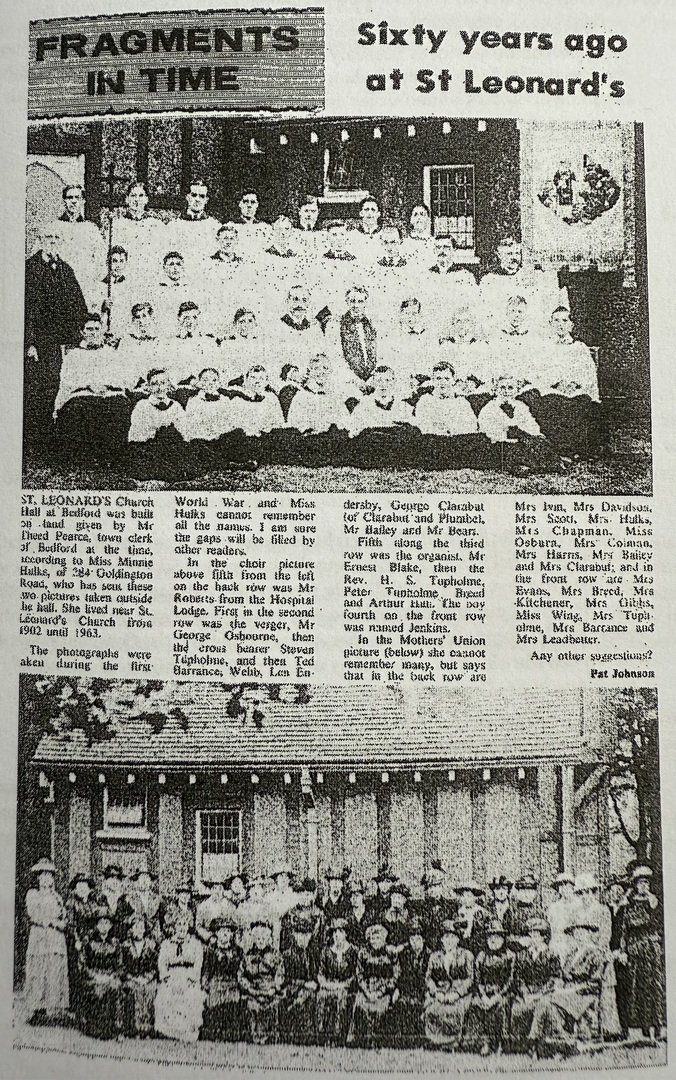
Below are various images captured of St Leonard's Church exterior & interior as well as, St Leonard's Hospital (Now the Church Centre) next to it.
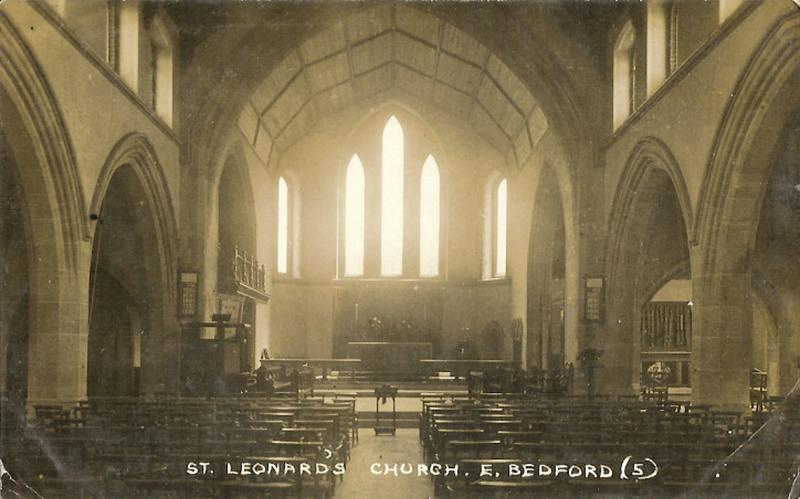
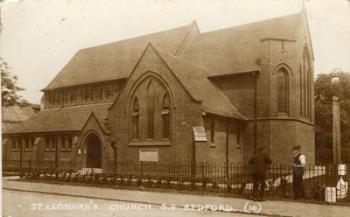
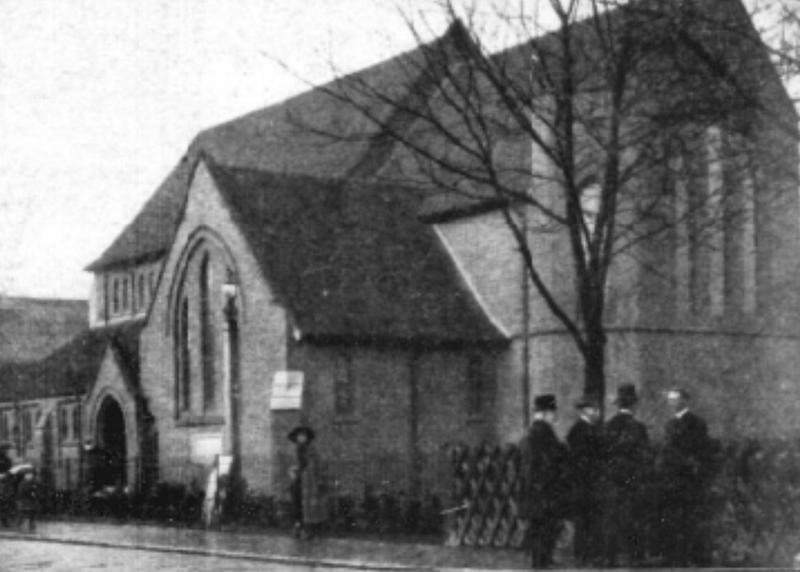
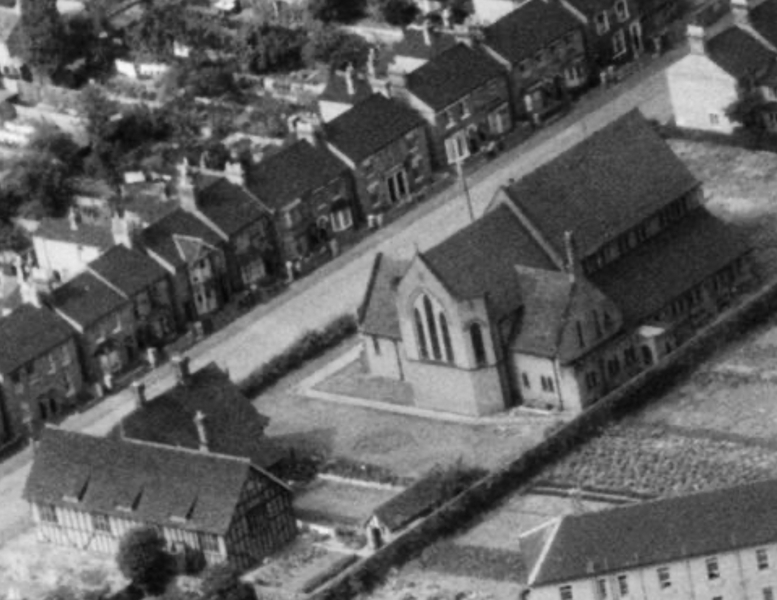
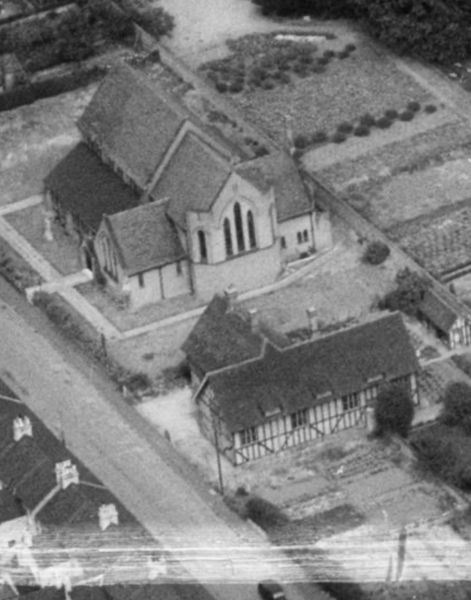
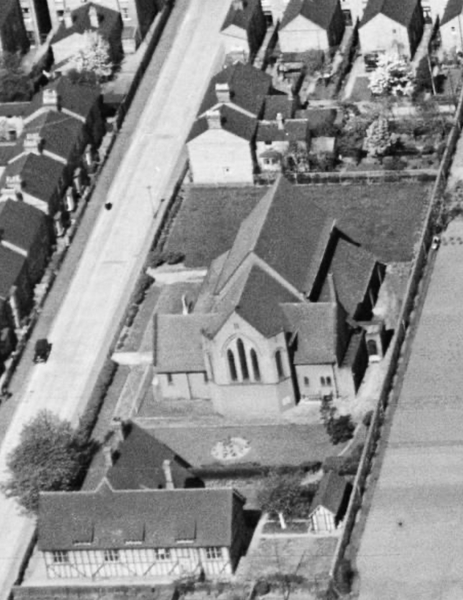
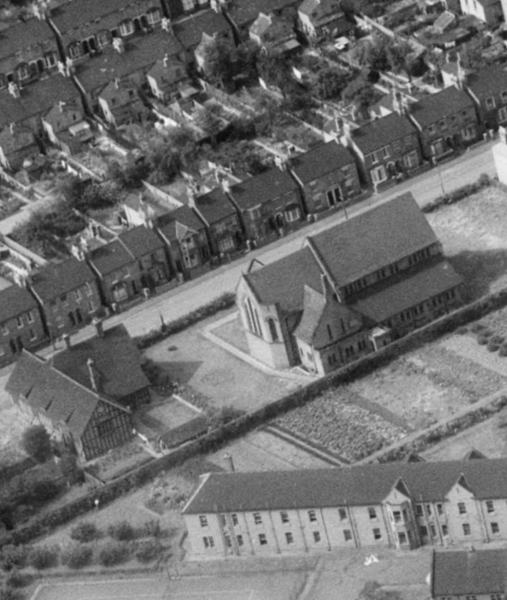
Judging by the number of Easter communicants, the congregation numbers remained fairly stable for the duration of World War I.
St Leonard's declared Redundant
There were dark clouds on the horizon. World War I began just six months after the consecration service of February 1914. The effects of war and other social changes resulted in a steady decline congregation numbers as shown by this sampling of Easter Communicant numbers:
From 1966, there is occasional reference to an 'Indian service'. In 1968 this included an service on Easter Day in addition to the 3 services but no numbers given.

In 1979 the diocese gave the Rector of St. John's, Donald Strong, three years to re-establish a viable congregation in St. Leonard's. With the aid of a Church Army worker and members of St. John's congregation, regular Sunday services took place in the chancel. The bricked-off nave was used by the Manpower services for an occasional youth training scheme. It needed a missionary zeal and warm clothes to survive services in the draughty, blocked-off chancel and great faith to think of expanding the congregation in such a place! The hall was even more unwelcoming with shabby, neglected interior and antiquated boiler.
St John's Rector and P.C.C. wanted to see St. Leonard's revived as a parish and place of worship, but the redundant church itself was already in need of a lot of work including a sagging roof. The Redundant Churches Commission simply reiterated that anyway the church was closed and redundant.
From 1975 to 1991 the Rectors and P.C.C. of the joint parishes grappled with siren voices from the redundant Churches Commission and Diocesan Pastoral committee who wanted to augment the price for the redundant church land by getting St John's to sell some of the hall and/or spare land to the hospital at the same time. Some of the plans put forward to try and achieve a modest place of worship for St. Leonard's that way included:
"A new church building to enhance its work and future and also enable the hospital to build an Elderly Mentally Ill unit on a part of the land ... possible joint usage of a new church building (by the hospital and church...exchange the present land for a plot at the end of Endsleigh Road for a new church." (from review papers presented by Revd. Michael Parker, June 2nd 1991). The hospital authorites blew hot and then cold, the Redundant-Churches Commission were long-winded and convoluted and all projects remained clouded in uncertainty.
By 1975 the church was declared 'redundant'. The Redundant Churches Commission sought alternative use for the building, although there was also pressure to pull it down and sell the land to the hospital. In March 1978 the Redundant Churches Commission announced a consultation about its proposal to sell the church to the Ramgarhia Sikh Society. As this would have been the first church building in the country to be sold for use by another faith group, it caused much debate and heated arguments in and through the national as well as local newspapers. After a year of consideration, the Commissioners decided that "to sell the church to the Sikhs would seriously hinder the work of Christians in St. Leonard's Parish.
That still left the problem of an empty church. The Manpower Services Commission were initiating Youth Training Schemes (Y.T.S.) at the time and so the Redundant Churches User Committee allowed the nave to be used for one such group and a temporary internal wall was built to block off the nave from the chancel. At the same time the Rector of St. John's was given pastoral care of the parish, with the proviso that the redundant church might be temporarily used to see if the church congregation could be built up within the next three years.
The task seemed daunting! The tiny remnant of the St. Leonard's Church congregation opted to continue to meet in the cold, gloomy chancel rather than in the shabby church hall. The faithful St. Leonard's stalwarts still remembered were Mrs. Pilgrim (churchwarden, Miss Clark (organist), Miss Dora Webb, Mrs. Roy, Mrs. Northwood and Mrs. Batiuk. Some members of St. John's Church moved to St. Leonard's to support them and regular services began with a combination of clergy, lay readers and lay members taking the services.
A headline in a small local newspaper of June 12* 1979 proclaimed
"Church begins to live again."
The redundant Anglican Church which was nearly sold to the Sikhs is enjoying a new lease of life. A stay of execution by the Church Commissioners has meant that St. Leonard's Church, Bedford is now being used for Christian worship again. A spokesman for St. Albans Diocese, Mr. John Bulmer, said "The stay of execution for three years has been given to see whether the church can be built up again. If things are working well for St. Leonards it may not be redundant any more." Members of St. John's Church, Bedford - who have been given the chance to re-establish the work - recently started holding a monthly service at St. Leonard's in Victoria Road. The curate, the Rev. Cecil Quinn, said "It was super. We had more that 40 people there last month, half of whom were Asians". Weekly morning services will be started in the Autumn."
So a Sunday morning weekly service began. Slowly more from St. John's Church transferred to St. Leonard's. A Church Army captain, lan Provost, was appointed to focus on St. Leonard's and by October of 1979 it was reported that the Harvest Service had seen a congregation of nearly 100, though it must be said that a good proportion of those would have been those coming from St. John's and other churches to show support. In addition a group of Christians from the Church of North India held a Punjabi service there in the afternoon with Dr. Clement Moss (retired ordained missionary) and Geuff Williams (lay reader) assisting. Although the numbers were still less than twenty for each of the two congregations, there was sufficient use of the church by the Y.T.S. and the church for the Church Commissioners to defer complete closure.
Although the church building was still only 75 years old, there were concerns about the state of it and particularly problems with the roof. When one of the churchwardens wrote to the Redundant Churches User Committee about this, the reply from the Redundant Churches User Committee on September 26* 1986 made it clear that the bill for any repairs to the chancel must be met by St. John's and St. Leonard's and to the nave by the Y.T.S. The latter scheme came to an end so there was no-one to pay for more extensive repairs across the whole roof.
At subsequent P.C.C. (Parochial Church Council) meetings the problems of St.
Leonard's roof was raised but no solution was forthcoming. Clearly a church built which probably seated around 400 people would be an unacceptable burden for its upkeep on a combined church congregation of around 150.
No reprieve for the church building
On February 22nd 1988, a meeting was held between the Church Council of St.
John's and St. Leonard's and the Redundant Churches Uses Committee at which the latter stated that:
"The redundancy had run its allotted time; money had been spent on
'patching up', but now needs major repairs involving a vast amount of money, therefore the church will have to be demolished. The decision had been deferred for ten or more years because of the Asian congregation and growing English congregation but cannot be further delayed." A further blow was added:
"The Church is technically vested in the Diocesan Board of Finance, but any sale (presumably of the land) would be through the Church Commissioners. One-third of proceeds go to the Redundant Churches Fund and two-thirds to the Diocesan Pastoral account... If continuing on-site worship had been envisaged the time of redundancy in 1975, money would have been available from sale proceeds. Despite the fact that there is now a worshipping community, the Diocese cannot go back on those conditions." So the outlook was still bleak. It was difficult to envisage any evangelism or significant growth into such an unwelcoming church environment where its tiny congregation were only 'squatters' in a blocked-off section of a church facing demolition. The church hall next door was weather-proof but shabby and would also need internal renovation to make it fit for purpose. For some a church hall was not the same as a church.
St Leonard's Church Fire & demolition
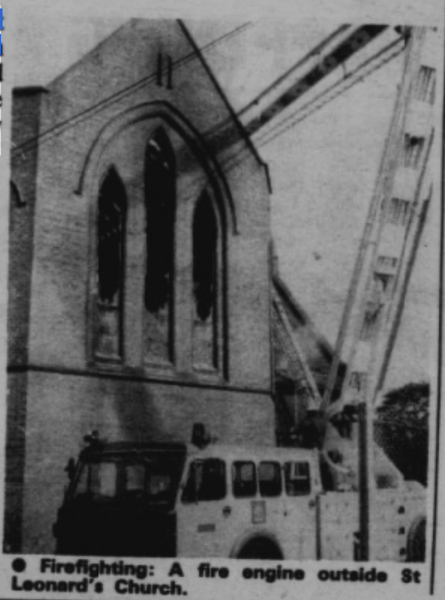
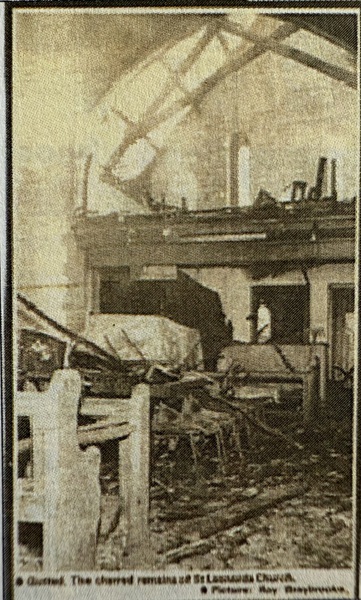
Fire broke out in the chancel in the early hours of Monday August 22nd
1988 and took an hour to bring under control, leaving the chancel completely gutted. It is thought an electrical fault caused the fire. The congregation had grown to around 20-25, mainly people from St John's but also extra locals as well as, a small Indian congregation with a service in Punjabi.
It was evident that the Diocesan Pastoral Committee was not going to fund the redundant Church site, in doing so, they had priorities for money to go towards Luton. The Rector and P.C.C. decided that selling some of the remaining land would not be enough to build a new Church. However the redundant commission was required to give a portion of the money for a strip of covenanted land next to the Chuch Hall. That money plus the fire insurance from the organ and contents of the Church was enough to refurbish the Hall as a Church Centre.
An article from the Bedfordshire Times on August 25th 1988, Titled: Blaze Chuch to be knocked down, details;
FIRE-ravaged St Leonard's Church is to be knocked down and the site used for new houses. Outline planning permission for housing on the land in Victoria Road was granted just two weeks ago. David Cheetham, the St Albans diocean regis-trar, said that it was very unlikely that the church would be rebuilt as costs would run into tens of thousands of pounds. Tuesday's fire means the planned development probably be pushed through, he said, adding that it was a very sad day for the con-gregation. But the rector of St Leonard's, the Rev Tom Overton, has been quick to promise parishioners that they will not be forgotten. They will be rehoused eventually but just where is not certain.
Mr Overton, who is rector of the united parishes of St Leonard's and St John's, first heard about the devastating fire when he was phoned by the fire service at 8 an on Tuesday. Experts believe the fire, which took an hour to control, was started by an electrical fault above the organ. The shape of the church roof made it a difficult blaze to control. Four hours after it began firemen were still checking the building for "hot-spots' using special cam-cras. Said John Evans, as sistant divisional commander for Kempston - one of three fire units to attend: "When 1 arrived the whole building was filled with smoke."
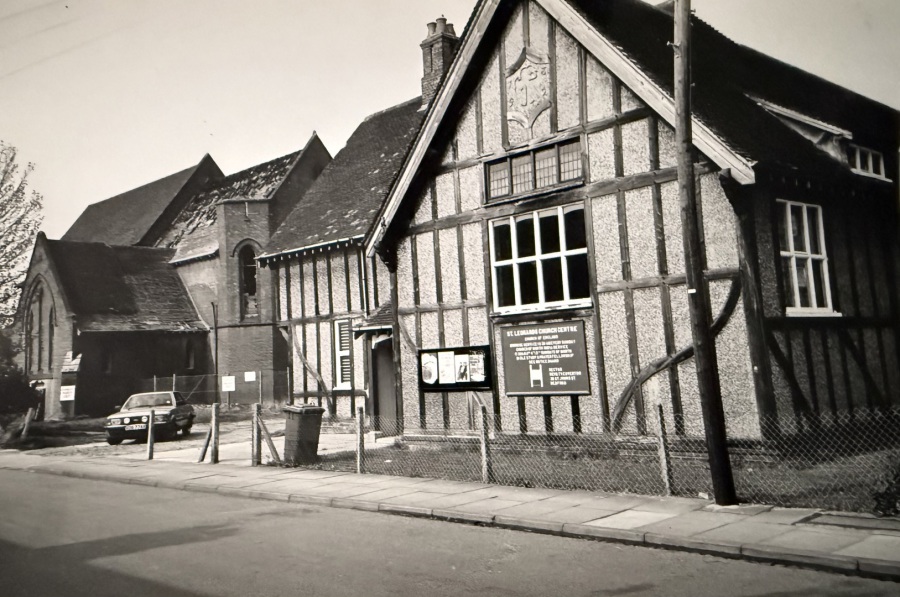 St Leonard's Church after fire standing next to St Leonard's Hall
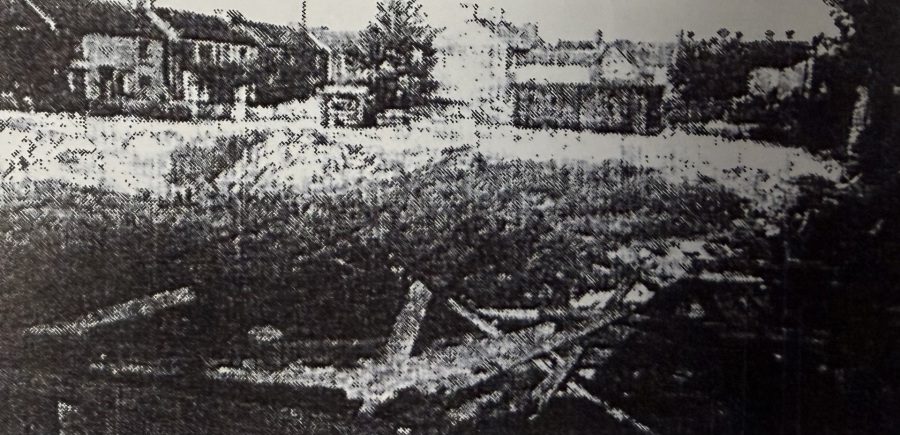
As shown above, the Church's demolition took place in October 1990, Photo taken from Bedfordshire on Sunday October 14th 1990.
But the Church is the people who worship there. It was a timely reminder that: "The Church's one foundation is Jesus Christ our Lord."
St Leonard's Church Centre
So after 13 years of worship in an inhospitable environment in a closed church, the real church - its congregation - joyfully began anew on June 14th 1992 in the refurbished church hall, now called St. Leonard's Church Centre. The parish had become the united parish of St. John's and St. Leonard's - one church, two centres" was the Rector's theme. The congregation has doubled, with most of the growth from the local area and Kempston. Many of the 'survival squatters' are still at St. Leonard's, although the last of the "six old ladies" died earlier this year. The former Punjabi congregation took the decision in 1992 to join in the English language service rather than keep to a separate service. A number of short-term contract hospital staff from overseas, especially from the Indian sub-continent, find St. Leonard's a haven, helping their families adjust to life in England. Pray for ongoing and outgoing work and witness so God's kingdom will grow in this area of Bedford to the glory of God and the joy of salvation for many. (S.L. November 14 2002).
Reactions were mixed in August 1988 among the 'squatter' congregation about Sunday morning services in the church hall. For some this seemed the end of the struggle to keep alive a Christian 'church' in this part of the joint parish of St. John's and St. Leonard's. Others saw it as a potential opportunity.
Unlike the redundant church, this building was not in imminent danger of demolition and it was dry, airy and moreover warm - even if rather shabby and with a boiler in the main hall with a constant hiss and loud rumbles accompanied the hymn singing! It still felt like squatting in an unpromising place from which to build the church's work and witness.
But quietly behind the scenes the former treasurer and the treasurer of St. John's and St. Leonard's, Cyril Osborn and Bernard Hicks, were assiduously working away at the finances. Although there could be no insurance on the redundant church building, it had been maintained on the organ and furnishings of the chancel, which included an oak chancel screen of 1925, an oak pulpit and a stained glass in the east window. They carefully drew up a list of items and made a claim.
In addition there was compensation from a covenant in the land sale of tou for the church that "no wall of any building thereon other than a Clergy house or
Incumbent's residence should be nearer than twenty five feet to the fence of the Trustees' property" (i.e. St. Leonard's Hospital building). Both together came to a surprisingly significant sum of money.
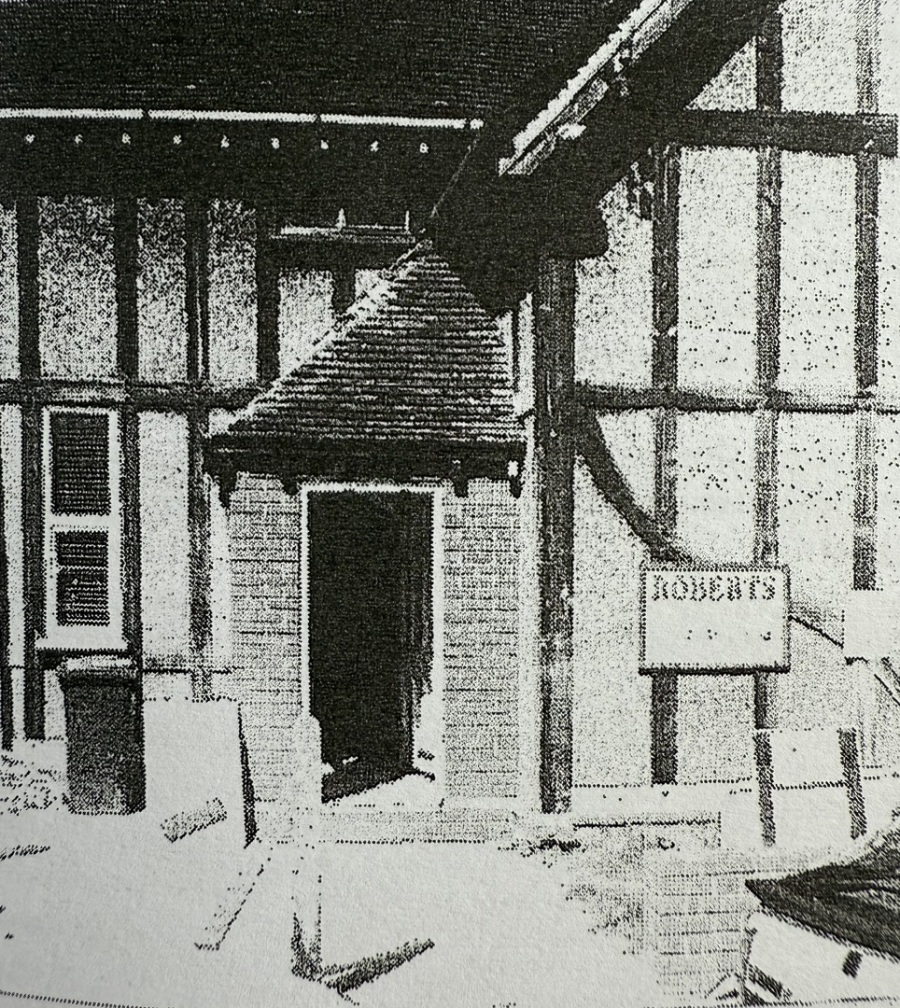
Work on the finances combined with the energy of a new Rector, Michael Parker, and backing of the PCC led to a decision to close the hall Easter Monday 1992 for a complete refurbishment of the hall.
Would the congregation return after a three- month closure? Would those who went back to St. John's return again?
The doubts were dissipated at the re-opening celebration service of thanksgiving on Sunday June 14th 1992 with a congregation of just over 40.
The building itself was 100 years old in 1992, so the previous day saw the centenary celebration for the hall as part of the revival of St. Leonard's. It was an open day with tea served by ladies in Victorian costume.
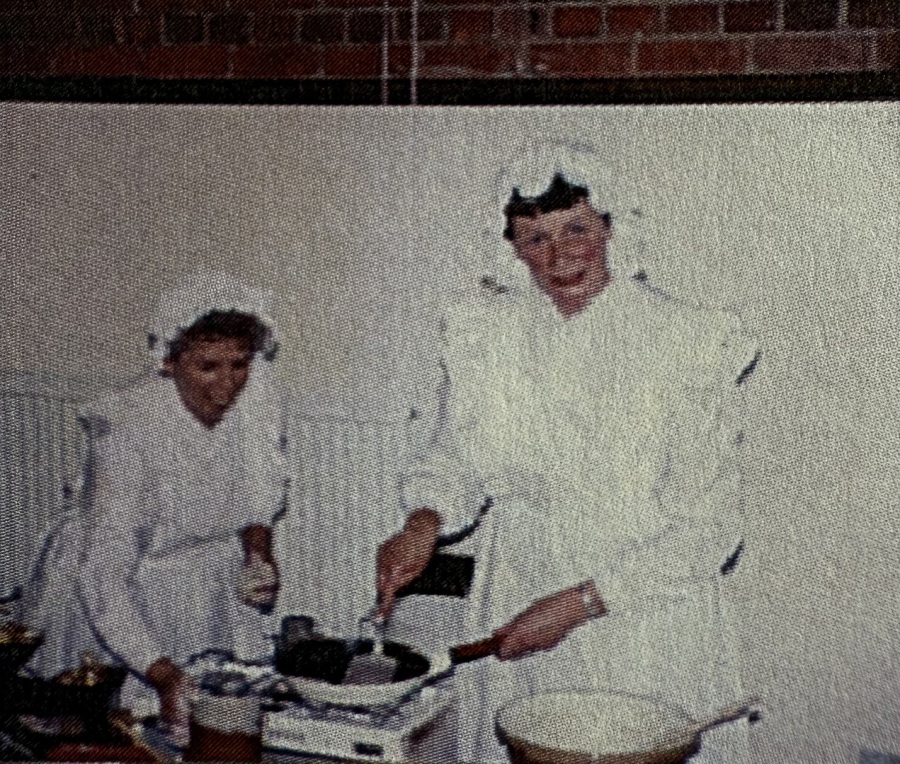 Bedfordshire Times Series, June 19 1992
As shown in photograph above. In a local newspaper this was colourfully described as:
"The food was so well served by Victorian serving wenches that it would have made your mouth water as the smell of dropped scones, pancakes, sweet cakes and other goodies were put on show.
St Leonard's traditions continued and Paul Wyatt's ministry was not in vain. The two congregations which had formerly met seperately in the redundant Church, one for a service in English and the other in Punjabi, joined together for a combined morning service. Over the 20 years since the re-opening by 2009 the congregation had gradually grown and was a multi-cultural congregation with up to 70 members on Sunday mornings.
"Through all the changing scenes of life, in trouble and in joy. The praises of our God shall still, Our hearts and tongue of employ"
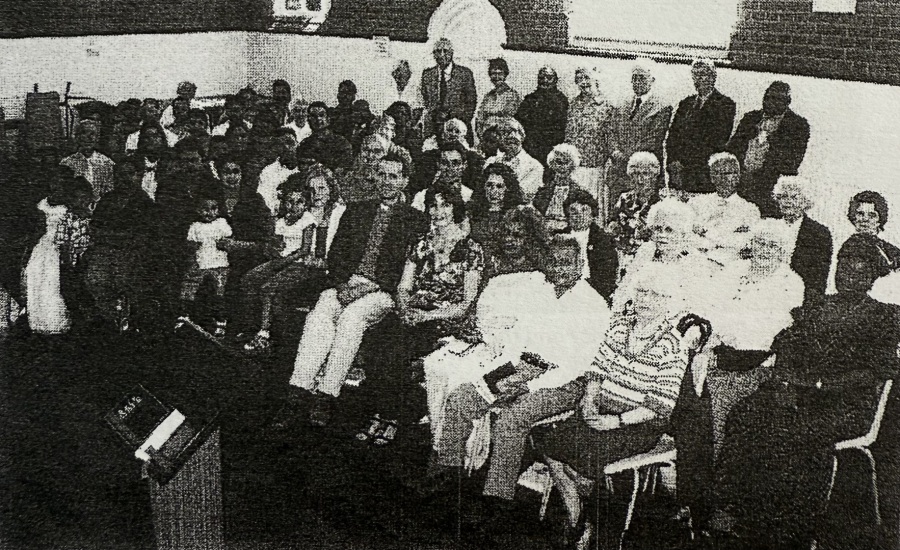 Congregation in June 2009
Site map of former Iron Church, 'New' Church & Hospital
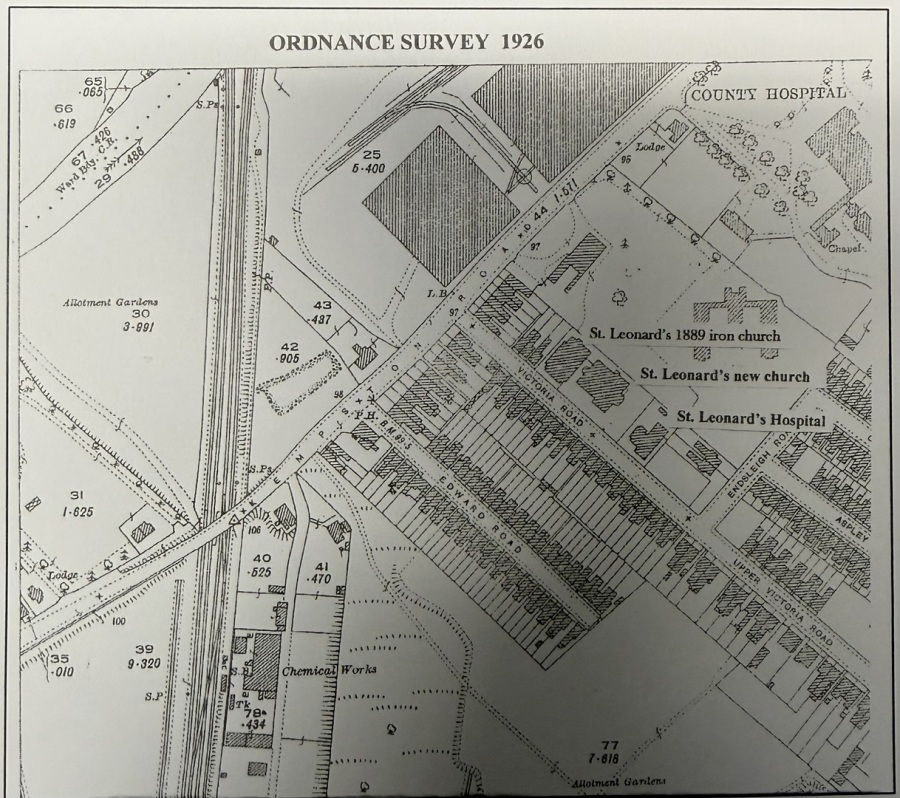 Ordance Survey 1926
St Leonard's WW1 Memorial
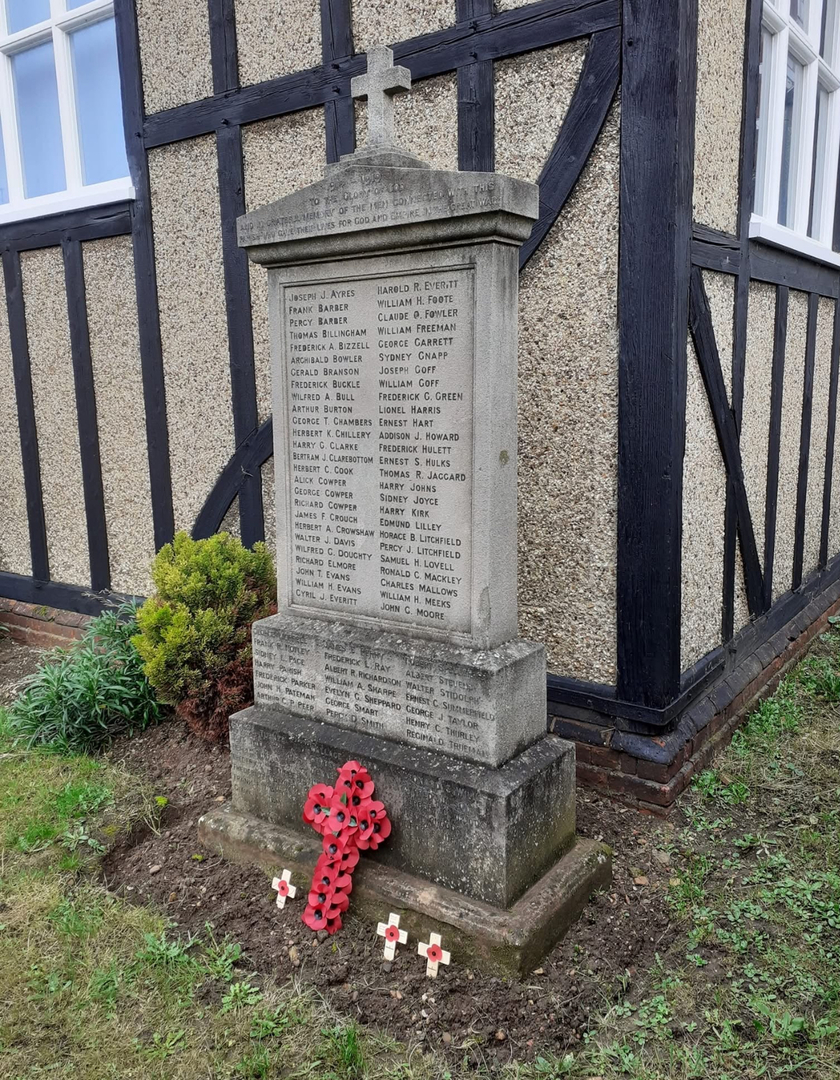
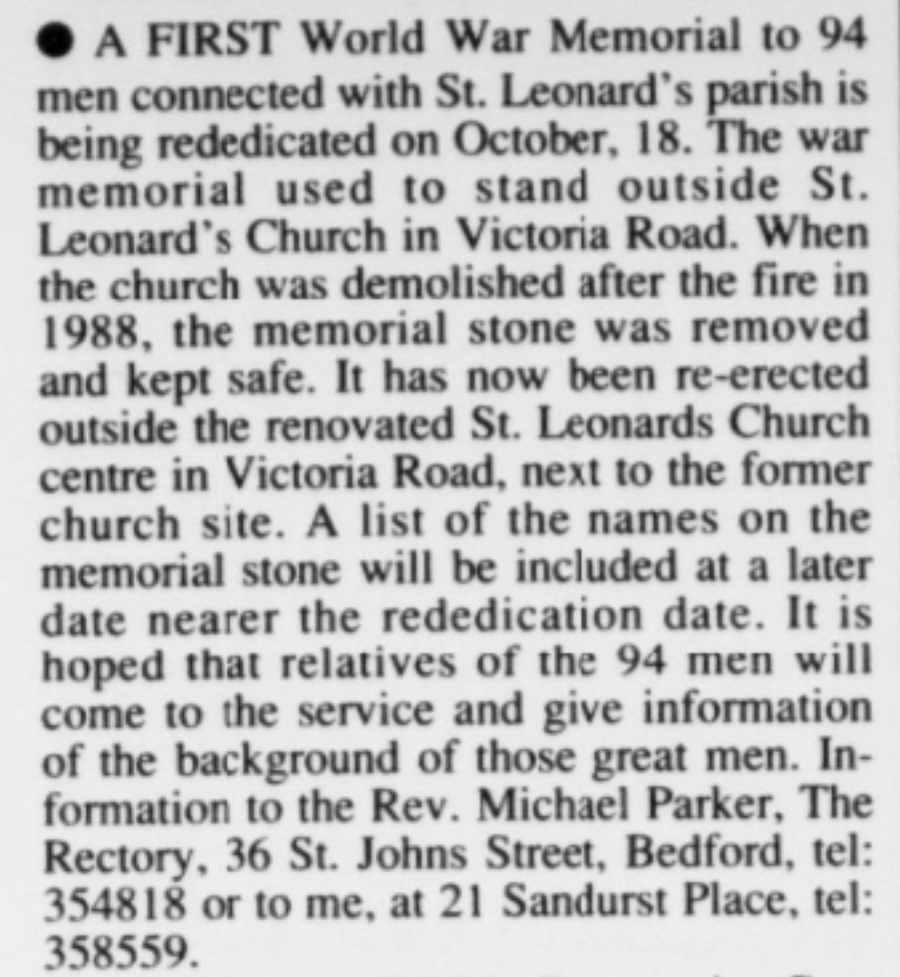
The WW1 memorial tablet still stands at St Leonard's Church Center which once stood outisde the 'New' Church, however relocated after the Church fire as stated in the article below:
As stated by another news article: The unveiling of St. Leonard's War Memorial took place on Sunday afternoon. It stands facing Victoria Road, on the west side of the Church, and consists of a tablet in British marble, on a base of stone, and surmounted by a plain cross. It in inscribed. " 1914-1919. To the Glory of God, And in grateful memory, of the men connected with this parish, who gave their lives for, God and Empire in the great war. Here follows a list of over 90 names, inscribed on the tablet and base, At the unveiling ceremony on Sunday afternoon, there were present the Vicar (the Bey.F. L. Staples), the late Vicar (the Rev. H. S. Tap-holme). Mayor and Mayoress (Mr. and Mrs. W. B.Sowter) Churchwardens (Mr. F. B. Heath and Nr. G. Gibbs): Mr. J. Godfrey, who has noted as treasurer for the Memorial Pond, Mesara. Charles J. Mar-shall, A, E. Coleman, O. J. Munday, D. Haneock, C. Louren, A. Munns, M. Balley, and T. G. Harris, sides-meh: a representative military de tachment from the Barracks.Capt. Pottle, and many relatives of the fallen. The Choir took up & position facing the memorial, and led the singing Capt. Pottle performed the unveiling, and the Rey.H. S. Tupholme, who was Vicar throughout the war, the dedication. After the Dast Post had been sounded the gathering entered the church and an eloquent address was given by the Bev.Tupholme. At the conclusion the organist (Mr. B.B. Blake) played the Dead March.
St Leonard's Church Centre: Today
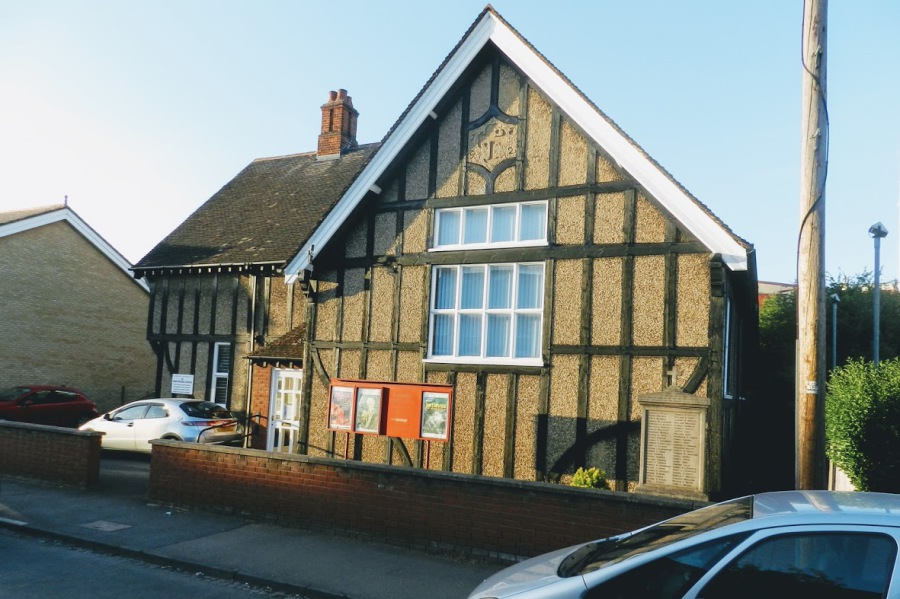
In July 2025, The Priest-in-Charge Rev Helen Stewart decided to no longer hold Sunday services at St Leonard's following congregation numbers declining over the past years and ability to use preaching resources elsewhere. The last service was held on 27th July 2025.
Despite this, St Leonard's Church Centre, remains a hub for it's local community and congregation of St John's & St Leonard's Church, Bedford.
We host all our outreach events here throughout the year , including, Pancake, Easter, Summer, Light & Christingle Parties.
It is also a continuously used space for ther NHS Cardiac Support Unit weekly and other groups such as our long-reigning Coffee Morning, which still takes place fortnightly on Fridays.
As of 2025, we have also launched our Dinner Church group providing, arts, crafts, games, bible stories and food for little ones, as well as, a Lunch Club & Mid-week Service on wednesdays for all to come along.
Cauldwell Primary use our facilities for their cookery workshops, as well as the Ukranian Saturday school group which takes place every Saturday.
Renovations to our interior and exterior continue to take place with hopes to increase our Hall & Lounge hiring for the community to use for their own events and parties.
Please contact the Church Office if you have any questions or suggestions for this page, all sources from this page can be shared if requested.

St John's
38 St John's Street
Bedford
MK42 0DL

St Leonard's Church Centre
Victoria Road
Bedford
MK42 9JS
The PCC of St John's & St Leonard's Church is a registered charity no. 1131545

 Print
Print 